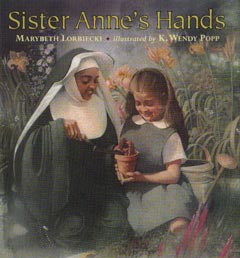
(Written by Marybeth Lorbieki and Illustrated by K. Wendy Popp)
A wise teacher will challenge her students to pay special attention and to talk about the words and images in the story that relate to hands… When Anna and Sister Anne meet, Sister reaches out to touch Anna's cheek, and Anna backs off as if Sister's hands were hot. Sister's helpful hands teach Anna to write neat cursive letters. And, when Sister Anne shares some of the hatred that she's felt in her life, she gently opens her students' eyes and their minds:
"One thing you're going to learn is that some folks have their hearts wide open, and others are tight as a fist…" (www.education-world.com/a_books/books098.shtml)
Historically, the civil rights movement was one of the most significant events in American history. The 1960's have come and gone, but aruguably this issue has not gone away. Clearly, this social justice issue did not play out in the same manner in Canadian history. That doesn't mean that the message of this book loses its relevance.
1. We have established that children learn social behaviour from their primary caregivers. Describe Anna's parents. Does she exhibit social behaviours that are reflective of her parents? Explain.
2. "Roses are red, violets are blue, dont' let Sister Anne get any black on you." This was written on a paper airplane that was thrown at Sister Anne by a student in her class. Explain why this is more likely the voice and feeling of an adult, rather than the voice and feeling of a child.
3. When Sister Anne showed the children the photographs the following day in the classroom, why were the children so shocked? Why do you think that they weren't aware of these events?
4. What is the significance of hands in this story?
5. Comment on the responsibility that parents have in terms of influencing their children's social behaviours and why reading a book like this will help them in teaching their children valuable life lessons about the people that their children share the world with.
6. In your opinion, is it "bad parenting" when a parent has demonstrated racist social behaviours, even though they have provided all the basic necessities of life and appear to love their children unconditionally? Explain your position thoroughly.


