Tuesday, 6 May 2008

Lighthouse: A Story of Remembrance


Written Robert Munsch and Illustrated by Janet Wilson.
1. Do you think that children understand death and dying? When do you think a child comes to this understanding?
2. In the story, Sarah does not appear to be sad as she talks about her grandpa. Why do you think that is?
3. Why do you think it is harder for adults to deal with death than younger children?
4. How would you explain or answer these questions if they were asked of you by a young child?
a.) Why do people die?
b.) What happens to people when they die?
c.) Should death be something to be feared?
d.) Is God punishing people when they die?
5. As a child growing up, what were your own questions or curiosities or fears about death and dying? How did your parents deal with it?
6. In your opinion, how young is too young to start explaining death and dying to a child?
7. Would you use this book as a parent of a child who has either experienced death or is curious about? Explain.

Friday, 11 April 2008

What is God?

Written by Etan Boritzer and Illustrated by Robbie Marantz

What would you do if a child asked you this question? The reality is that this question can arise at any age. From my own experiences in teaching religion in high school, teenagers have a difficult time answering this question, even the most devout. Religion is a sensitive area of discussion. Personally, my religion influences how I live my life and see the world, but I have TONS of questions and issues concerning Church teachings. What can I say, I'm a work in progress! I think everyone is really. We're all at different points on our religious journey. If you were a parent how might you start your child on theirs?

1. What specifically do you like about how this book answers the question, "What is God?"

2. What would you have said that might have been different?

3. Many of you, in your Parenting Philosophy, discussed allowing your child, when he or she was older to choose a religion if the one they were being raised with was not appealing to them. Do you think that talking to children about other faiths at a young age encourages children to seek the answers they have in other religions? Does exposure to other faiths simply make them better citizens of the world? Explain your position thoroughly.

4. Many have argued that children are the most faithful when they are younger. Why do you think this is?

5. It not uncommon for teenagers to declare that they don't believe in God or that they have serious issues with the institution of the Church? What happens between childhood and the teen years that causes this to happen?

Friday, 28 March 2008

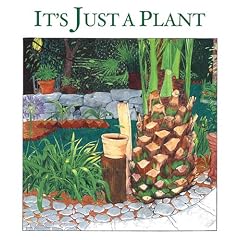
It's Just a Plant


You can be 100% positive that you would NEVER EVER EVER EVER see this book on any bookshelf in any classroom!
Here is a quote by a famous filmmaker:
"I think the big mistake in schools is trying to teach children anything, and by using fear as the basic motivation. Interest can produce learning on a scale to fear as nuclear explosion to a firecracker." ~ Stanley Kubrick
Think about this book from the point of view of a student...
1. Why might this book not have been in any classroom you learned in?
2. Who do you think gets to make those decisions?
3. How do you those decisions come about?
4. Do you think it is a democratic process - determining which books are "fit" for classroom use?
5. Might this book have impacted you in any way if you had read it as a child? Do you think the impact might be the same or different for boys and girls? Among different races? Among those in different socio-economic conditions?
Think about this book from the point of view of a parent...
6. Would parents be okay with this book in their children's classroom? Explain.
7. How does the website reccomend that parents use this book with their children?
8. Do you think that all cultures would embrace this book?
9. Read the reviews. Write your own...

Thursday, 6 December 2007

Something From Nothing


(Written by Phoebe Gilman)
In the retelling of a traditional Jewish folktale, Joseph's baby blanket is transformed into ever smaller items as he grows until there is nothing left — but then Joseph has an idea.
This story has a number of elements that makes it so wonderful for children to read, namely:
*relationship with grandparents
*family
*multiculturalism
*folktales
1. In this story, Joseph has a very close connection with his grandfather. In this society, do grandparents have the same significance that they once had?
2. Is your relationship with your grandparents the same as Joseph's? Explain.
3. This is a traditional Jewish folktale. Of what use is this book to Roman Catholic parents?
4. Why are folktales generally good for children? (Feel free to look up this genre of literature on the Internet to further expand your understanding.)


I Love You Like Crazy Cakes

(Written by Rose Lewis and Illustrated by Jane Dyer)

Nearly everyone knows someone who has adopted a child, and more and more of these adoptions happen internationally. In simple, heartfelt language, I Love You Like Crazy Cakes tells the story of how one mother found her baby daughter by travelling to China. The story of that journey, based on the author's own experience, is a celebration of the love and joy a baby brings into the home.
(http://www.hachettebookgroupusa.com/books/60/0316525383/index.html)

No doubt that the adoption process is difficult for parents, especially if they are adopting a child from another country.

1. Using the Internet, locate the process that parents must undergo in order to adopt from a foreign country. What is the general procedure? Try to be as thorough and specific as possible.

2. Why do you think that parents are willing to adopt from another country other than their own? Do you think it is right?

3. Often times, we have seen on television shows when a character finds out that he or she is adopted, it is often a devastating revelation. Why do you think this is so?

4. What purpose does this book serve for both children who are adopted and those who are not?

The Giving Tree


(Written and Illustrated by Shel Silverstein)
This story of a boy who grows to manhood, and of a tree that gives him her bounty through the years, is a moving parable about the gift of giving and the capacity to love.
1. Is this simply a story about a boy and a tree?
There is quite a bit of symbolism used in this story for the purpose of conveying a specific message. What is it?
2. If you were to use this book to teach your children about religion, how would you go about doing so?
3. In what way is the boy like all children? Who does the tree represent?

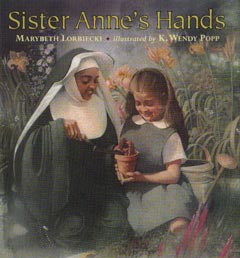
Sister Anne's Hands


(Written by Marybeth Lorbieki and Illustrated by K. Wendy Popp)

A wise teacher will challenge her students to pay special attention and to talk about the words and images in the story that relate to hands… When Anna and Sister Anne meet, Sister reaches out to touch Anna's cheek, and Anna backs off as if Sister's hands were hot. Sister's helpful hands teach Anna to write neat cursive letters. And, when Sister Anne shares some of the hatred that she's felt in her life, she gently opens her students' eyes and their minds:
"One thing you're going to learn is that some folks have their hearts wide open, and others are tight as a fist…"
(www.education-world.com/a_books/books098.shtml)

Historically, the civil rights movement was one of the most significant events in American history. The 1960's have come and gone, but aruguably this issue has not gone away. Clearly, this social justice issue did not play out in the same manner in Canadian history. That doesn't mean that the message of this book loses its relevance.

1. We have established that children learn social behaviour from their primary caregivers. Describe Anna's parents. Does she exhibit social behaviours that are reflective of her parents? Explain.

2. "Roses are red, violets are blue, dont' let Sister Anne get any black on you." This was written on a paper airplane that was thrown at Sister Anne by a student in her class. Explain why this is more likely the voice and feeling of an adult, rather than the voice and feeling of a child.

3. When Sister Anne showed the children the photographs the following day in the classroom, why were the children so shocked? Why do you think that they weren't aware of these events?

4. What is the significance of hands in this story?

5. Comment on the responsibility that parents have in terms of influencing their children's social behaviours and why reading a book like this will help them in teaching their children valuable life lessons about the people that their children share the world with.

6. In your opinion, is it "bad parenting" when a parent has demonstrated racist social behaviours, even though they have provided all the basic necessities of life and appear to love their children unconditionally? Explain your position thoroughly.

Monday, 26 November 2007

White Socks Only


(Written by Evelyn Coleman and Illustrated by Tyrone Geter)
A grandmother shares a story with her granddaughter about what it was like to grow up in the segregated South. One summer day, when Grandma was a little girl, she snuck into town to see if it was hot enough to fry an egg on the sidewalk. Feeling thirsty, she went to get a drink at the water fountain. When she saw the "Whites Only" sign on the fountain, she innocently took off her shoes and stepped up to the fountain in her clean white socks. As she was drinking, she was knocked to the ground by a white man who yelled "Can't you read, girl?" Seeing the treatment of the little girl, the town's black community gathered together to defy racism forever.
This is book with a universal message. It not only embraces issues such as racism and ignorance, but rather prejudice in general. When Evelyn Coleman read this book to a group of grade three students on Gallaudet University’s campus one hearing impaired caucasian boy jumped up shouting with his fingers, “That’s me. That little girl is me.” He understood that this book was not just about black and white but any form of prejudice. Not only did he transcend the issue of race but gender. This, of course, is the message Ms. Coleman wishes the book to convey, that, and a sense of triumph for anyone abused in a situation.
1. Upon reading this book to a child, what sorts of discussions could be had if the child were ever in this situation?
2. What is the difference between racism and prejudice? Give an example that illustrates and distinguishes the meaning of both.
3. What elements form/create racism and prejudice?
4. Who is the "chicken man"? What does he represent?
5. Why do you think the author made the story funny in the beginning, sad in the middle and happy at the end?

Tuesday, 13 November 2007

Emily's Art


(Written and illustrated by Peter Catalanotto)
Emily is an artist. She enters her work into the first grade art contest, but it doesn't turn out the way she had hoped. In fact, it leaves her broken-hearted...
1. What is this book really about?
2. In some of the illustrations, the images of Emily appear to be transparent. Why do you think she has been illustrated in this manner?
3. At one point, Emily's painting of her dog, Thor, is illustrated in black and white. Why do you think this is?
4.What do you make of the judge of the art contest?
5. Emily paints with her heart. What do you think this means?
6. What is this book good for?
Note of interest: This book is based on a true story. Emily is a real student who really does paint with her heart...

Wednesday, 31 October 2007

Fly Away Home


Written by Eve Bunting and Illustrated by Ronald Himler

This is a story about a homeless boy who lives in an airport with his father, moving from terminal to terminal and trying not to be noticed, is given hope when he sees a trapped bird find its freedom.

1. As with any book, children are usually attracted to the cover. The cover is a selling feature of a lot of children's books. What do you think would be the reaction of the average child upon seeing the cover of this book?

2. From what point of view is the story being told?

3. Do you think the author successfully presented this very difficult topic? In what ways?

4. What is the significance of the bird?

5. Is this a story worth reading to children? Why? If not, explain your reasoning. Is it the story itself or do you think the subject-matter is too difficult?

Tuesday, 16 October 2007

Amazing Grace

(Written by Mary Hoffman and Illustrated by Caroline Birch)

Amazing Grace is a book not only about the power of imagination, but one with a clear message: anyone can do anything that they can put their minds to. This book also does a good job of pointing out the fact that in society, there are still preconceived ideas about who should do what. People often find it difficult to change.

1. Can you think of any instances where there are traditional expectations about specific roles and who should fill them? Give examples of any role or position in society that is filled in a stereotypical way.

2. What are the dangers about allowing children to believe that only certain people can fulfill certain roles and functions in society? What do you think the consequences may be?


3. Some would argue that it is irresponsible to allow children to think that they can do ANYTHING, so long as they put their minds to it. Do you agree or disagree with this statement? Explain your position. (It's alright if are sitting on the fence...)

Feel free to add any other comments you have on any of the issues that arise in this book.

Monday, 17 September 2007

Feedback

Hey!
I will be posting my feedback for all of your blogs here. Please read the comments so that your blogging can progress throughtout the semester.

Thursday, 16 August 2007

Book 4: Smoky Night


(Written by Eve Bunting and Illustrated by David Diaz)


The 1992 Los Angeles riots, also known as the Rodney King uprising or the Rodney King riots, were sparked on April 29, 1992 when a predominately white jury acquitted four police officers accused in the videotaped beating of black motorist Rodney King when he resisted arrest following a high-speed car chase. Thousands of blacks in the Los Angeles area joined in what is known as a race riot involving acts of law-breaking including looting, assault, arson and murder. In all, 53 people died during the riots.


1. Why would an author want to recount such a violent event in the format of a children's book?


2. What are the key social justice issues being addressed in the story?


3. Who are the unlikely heros in this story? What lesson do they teach everyone? Is it a universal lesson that all children can understand?

Book 3: The Best Worst Brother

(Written by Stephanie Stuve-Bodeen and Illustrated by Charlotte Fremaux)

Something tells me that very few of you were ever read this sort of story. It's only in recent time have children's authors felt it necessary to write about children with special needs.

1. What benefit could knowing about children with special needs bring to a child who does not have special needs?

2. Should parents openly talk about this topic in the home on a regular basis or as the need arises?

Book 2: Voices in the Park


(Written by Anthony Browne and Illustrated by Ian Butterworth)

This book is not as straight-forward as the last one. We are introduced to four voices that appear to be telling the same story...

They all go to the same park, but are their experiences the same?

Are they looking at the world in the same way?

What do you think is the purpose of the use of different fonts when a new voice is introduced to the story?

There doesn't really seem to be an ending to the story. What would be the purpose in reading this book?

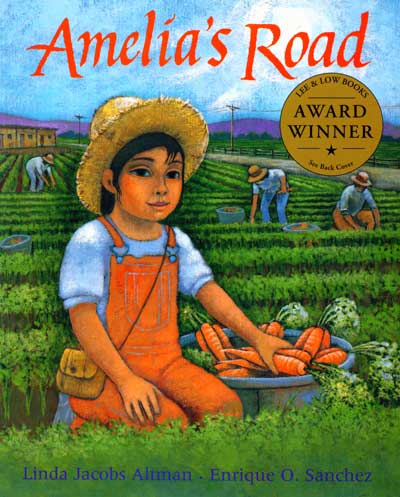
Book 1: Amelia's Road

(Written by Linda Jacobs Altman and Illustrated by Enrique O. Sanchez)

Admit it! You still love to be read to, don't you? I love this story. I was sitting in one of my Masters classes when our professor read this story to us and all of us went on this emotional rollercoaster with Amelia throughout the story.

What did you think of this book? In your response, feel free to include part of today's class discussion, as well as the following:

1. Why should children know about poverty? Shouldn't they be sheltered? After all, it is such an unpleasant topic...

2. Talk about the two teachers Amelia encounters in this story. How are they different?

3. What do you think is so important about Amelia's accidental road?

I really hope that you enjoy this story. Like all other children's books we will discuss this semester, it will be available in my classroom for you to look at as often as you wish.


Getting Started!

I firmly believe that a child truly misses out on a wonderful learning experience if he or she is not read to by their parent or caregiver. I also feel that children should be read meaningful literary pieces that help them to understand the world in which they live so that they can become more literate.

Each Friday, you will be introduced to a new children's book. Each book focuses on a specific issue. We will discuss the book in class, and then you will have the opportunity to express your thoughts, ideas and opinions about the book and what was discussed in class in this blog. You can discuss how the book made you personally feel, talk about the characters and how you might use this book to teach a child about the issue at hand. Discuss whether or not you like the book and if you would use it yourself. Feel free to discuss more than was just suggested.

A few things to note:
-blogging is mandatory
-refrain from offensive language or personal attacks on others or their ideas (it it totally
acceptable to disagree - and I hope debate arises - but you must do so in a way that
both your integrity as well as the person you address, whether directly or indirectly)

The plan is to book the computer lab on Fridays so that you can post your responses at school (I can't make any promises, and we have to be fair...). If you don't finish, it is your responsibility to complete your response on your own time. You can access this website from any computer in the school. I will check for your blogs on Monday. You will be assigned a mark out of 10 for each response. Failure to respond will result in a mark of zero.

I hope you enjoy this time during the week. I look forward to fabulous discussion and debate!